

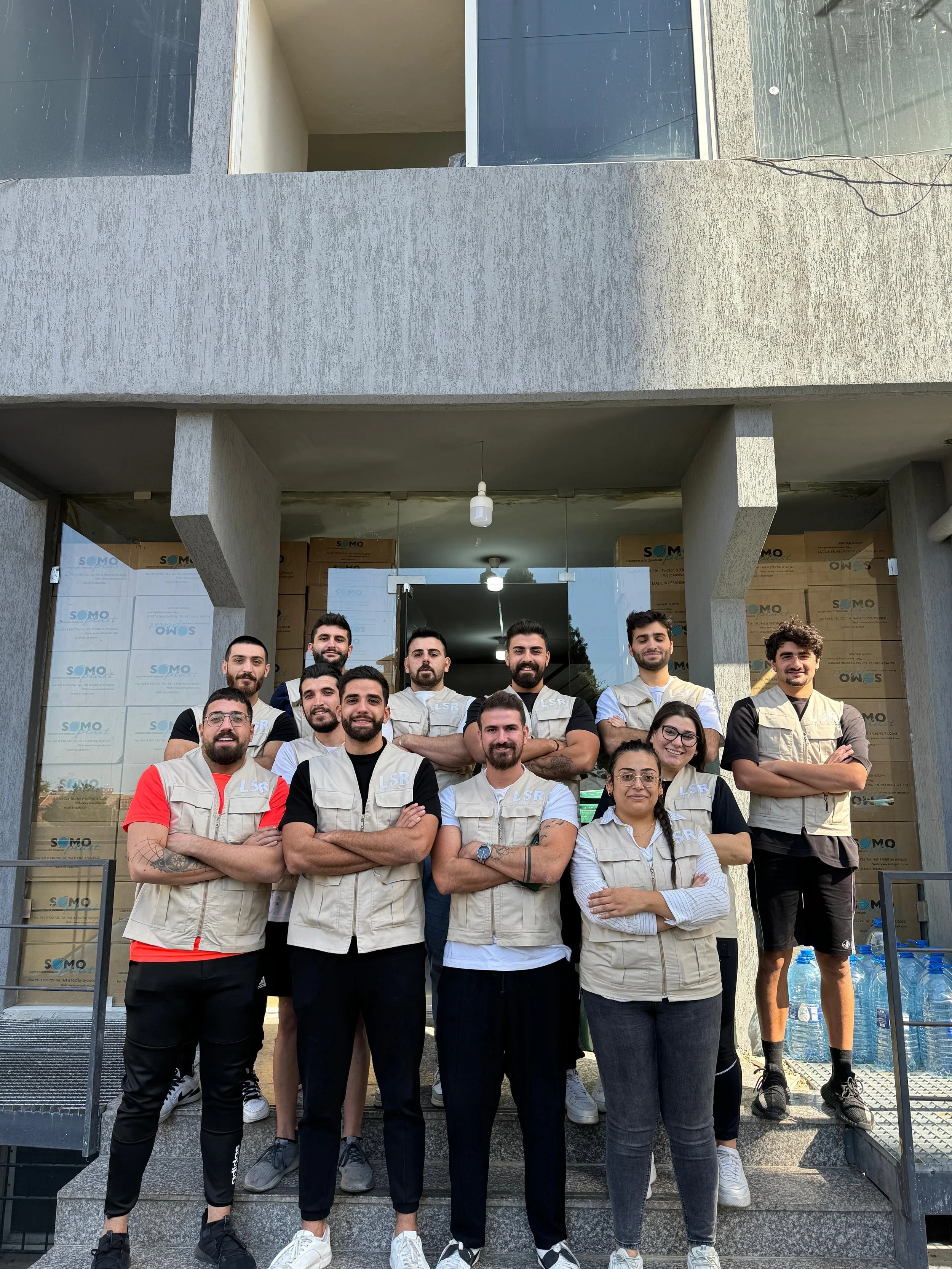
Driving change, strengthening communities
Introduction to LSR
Lebanese Social Responsibility (LSR) is a non-political, non-confessional, youth-led organization founded in 2015 and headquartered in Jbeil/Byblos, Lebanon. LSR works to support vulnerable communities across Lebanon through humanitarian assistance, protection, education, and community resilience programs. Originally established as a volunteer-based initiative, LSR has grown into a recognized local humanitarian actor, responding to Lebanon’s prolonged socio-economic crisis, displacement, and post-conflict recovery needs through integrated, multi-sectoral interventions.
Today, LSR operates primarily in Mount Lebanon, with an active presence in North Lebanon (Tripoli) and South Lebanon (Marjaayoun). Its work is rooted in close coordination with local authorities, community structures, and national and international partners.
LSR’s approach is needs-driven and community-centered, combining emergency response with early recovery and resilience-building. All programs are implemented in line with humanitarian principles, with strong commitments to protection, gender equality, accountability to affected populations (AAP), and protection from sexual exploitation and abuse (PSEA). By empowering youth, supporting marginalized groups, and strengthening local systems, LSR contributes to dignity, inclusion, and sustainable community resilience across Lebanon.
Main Sectors of Intervention

1-EDUCATION SECTOR:
LSR is one of the few active organizations in the Jbeil District authorized by the Ministry of Education to conduct tailored awareness and capacity-building sessions in public schools.
In parallel, LSR actively supports access to education by covering school tuition fees for vulnerable students, helping prevent school dropouts and ensuring continuity of learning.
To date, LSR has implemented more than 300 educational and awareness sessions, reaching students, teachers, and school communities across the district.
Key areas of intervention include:
Payment of school tuition fees for vulnerable children
Anti-bullying and violence prevention
Mental health and emotional well-being
Self-esteem, resilience, and social inclusion
Digital safety and responsible online behavior
Non-violence, civic engagement, and peacebuilding
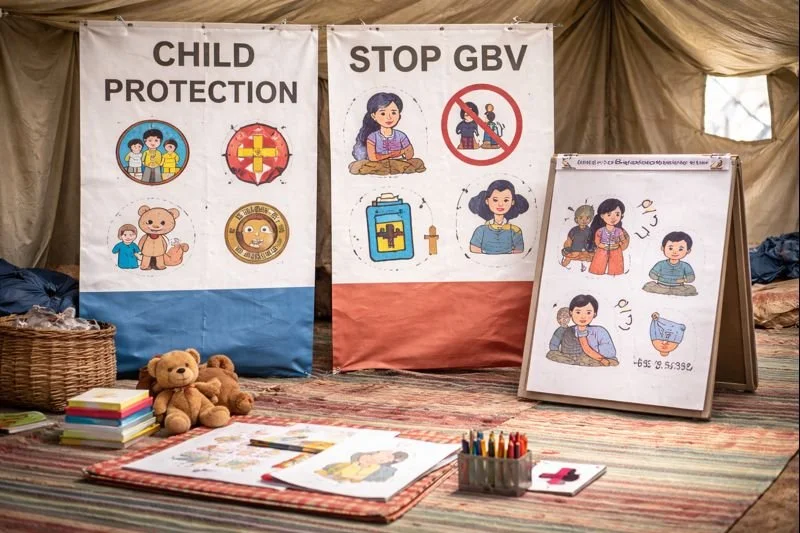
2-PROTECTION SECTOR:
LSR implements its protection strategy through two dedicated committees:
Child Protection Committee
Organizes educational, recreational, and psychological support activities (PSS,PFA) for children.Women’s Committe
Empowers women through skill-building, GBV awarness session, and targeted initiatives for social and economic inclusion.

3-FOOD SECURITY SECTOR:
Food Security and Agriculture are core pillars of LSR’s mission, addressing immediate food needs while strengthening local food systems and community resilience.
LSR implements integrated food security and agricultural interventions that combine access to safe and nutritious food with support to local farmers, cooperatives, and women-led initiatives. Through community-based approaches, LSR promotes dignity, sustainability, and local ownership.
The organization operates community kitchens and food assistance programs to support vulnerable households, displaced populations, and host communities, while ensuring compliance with food safety and quality standards.
In parallel, LSR supports agricultural livelihoods and local production, strengthening short food supply chains, preserving traditional food practices, and creating income-generating opportunities—particularly for women in rural and peri-urban areas.
All food security and agriculture interventions are implemented in line with humanitarian principles, while integrating protection, gender equality, accountability to affected populations (AAP), and localization.